

Open Container in Your Downtown
Crafted by Gabe Bailer, PP, AICP
In 2022, then-Governor Murphy signed legislation (S-2921/A-5554) into law, establishing N.J.S.A. 33:1-24.4, which authorizes municipalities to designate areas where open containers of beer and wine may be permitted for outdoor consumption—year-round. Yes, year-round. This article explores the provisions of the law, what it entails, and provides an overview of municipalities that have adopted it, along with the reasoning behind their decisions.
First, it is important to understand the premise behind how this law came into existence. The legislation evolved from policies implemented during the COVID-19 pandemic to support restaurants and bars. During that time, the New Jersey Division of Alcoholic Beverage Control (NJ ABC) permitted establishments to expand their licensed premises into outdoor areas such as parking lots, sidewalks, and even streets—many of which were temporarily closed to vehicular traffic to create additional public space.
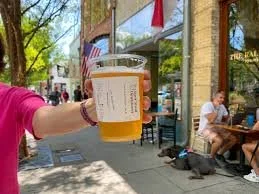
These measures aligned with New Jersey’s broader outdoor dining program, which was introduced to help businesses offset the impacts of indoor dining restrictions. The results were overwhelmingly positive. Not only did these initiatives provide much-needed economic relief to restaurants and bars, but they also increased foot traffic, activated streets and public spaces, and fostered greater social interaction. This, in turn, generated spillover benefits for surrounding small businesses within downtown districts.
Recognizing the success of these temporary measures, state legislators saw that outdoor dining and drinking could be safely and effectively managed. The activation of sidewalks, plazas, and closed streets—combined with increased economic activity and community engagement—ultimately led to the development of a formal framework and the passage of legislation permitting designated open-container areas in municipalities.
So what are the provisions of N.J.S.A. 33:1-24.4? First, a municipality must designate the location of the outdoor consumption area, which may encompass either the entire municipality or a specifically defined district, such as a downtown. The statute also requires that all alcohol sales comply with existing regulations of the NJ ABC, meaning only properly licensed establishments are permitted to sell alcohol. These may include businesses holding a plenary retail consumption, brewery, winery, or distillery. license.

Importantly, the statute makes clear that it does not create new liquor licenses; the number of available licenses remains controlled by the State’s population-based quota system. Additionally, the law grants municipalities the authority to establish local regulations governing the outdoor consumption area. These may include setting hours of operation, requiring specific types of containers (such as plastic cups), establishing participation requirements for businesses, and implementing public safety and enforcement measures.
Now that the law has been approved, what are some examples of municipalities that have designated areas for open-container consumption within their downtowns? Atlantic City was among the first to permit open containers within designated areas of its Tourism District. These areas generally include much of the Atlantic City Boardwalk, where visitors can carry alcoholic beverages while walking between casinos, restaurants, and bars.

The intent behind this policy was to reinforce Atlantic City as a destination entertainment district. By allowing open containers, the City encourages visitors to move freely between venues, increasing foot traffic, activity, and overall spending. However, the law includes clear limitations: alcoholic beverages must be purchased from a licensed establishment located within or adjacent to the designated zone, and drinks must be served in approved open plastic containers bearing the name or logo of the seller.
This approach has contributed to Atlantic City’s effort to enhance its identity as an entertainment destination, particularly as it competes with casinos in neighboring states such as Pennsylvania. While there is no definitive metric confirming the extent to which this policy has increased business activity or tourism, it serves as a clear example of a municipality leveraging the legislation to create a more dynamic and experiential environment for visitors strolling along the Boardwalk.
Another example of a municipality permitting open containers is Medford in Burlington County. Medford is uniquely situated approximately 30 minutes from Philadelphia and about 45 minutes from the Jersey Shore. Its historic downtown along Main Street is lined with retail shops and food establishments that help activate a highly walkable pedestrian environment.
In addition to these businesses, Downtown Medford is home to the popular eating and drinking establishment, Braddock's Tavern, and a cluster of breweries such as Lower Forge Brewery, Magnify Brewing Company, Farm Truck Brewing, and King’s Road Brewing Company. All of these establishments are located within walking distance of one another along Main Street, creating a cohesive destination for visitors to enjoy multiple venues and of course drinks in a single trip.
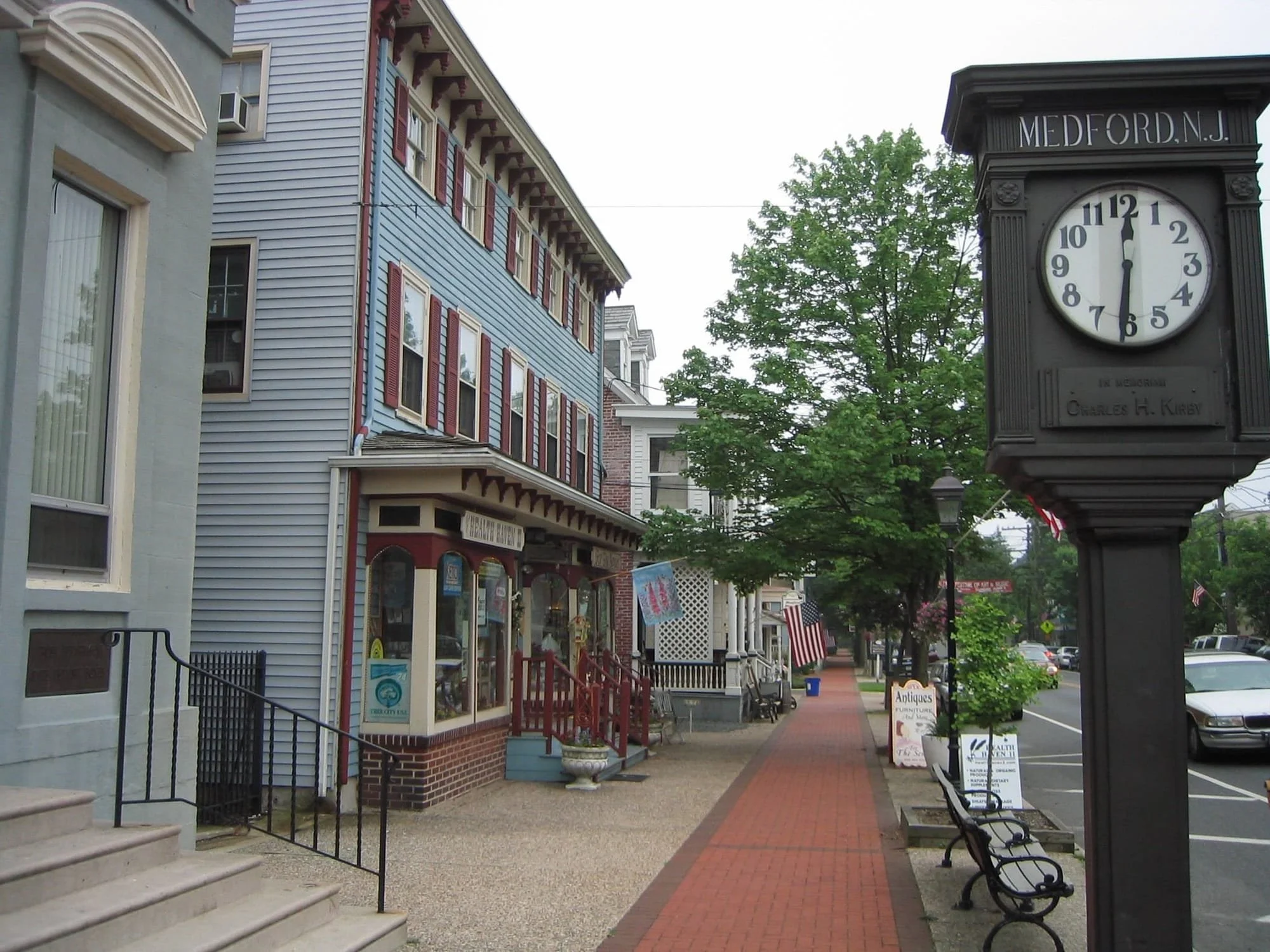
As these bars and breweries grew in popularity and helped establish Downtown Medford as a regional destination, the Township sought to build upon that momentum. In 2022, the Mayor and Council adopted an ordinance permitting open containers of alcohol within the downtown area. The ordinance requires that alcoholic beverages be purchased from a licensed establishment and that drinks be served in approved plastic cups bearing the name of the business. This policy enhances the overall downtown experience by allowing patrons to walk between establishments while enjoying their beverages, further strengthening Medford’s identity as a vibrant, fun-filled, walkable destination.
In speaking with Abbie Galie of Destination Medford and owner of Lower Forge Brewery, she noted that when the ordinance was introduced in 2022, local businesses were largely supportive, though residents living in the downtown area initially raised concerns. Those concerns were addressed by the Township Council through measures such as deploying walking police patrols during peak weekend hours and installing additional trash receptacles throughout the district.
According to Abbie, the open-container policy has been a success. She explained that it has made Downtown Medford more vibrant and enjoyable, attracting more visitors to experience the area. The policy has also created a “spillover” effect for surrounding businesses, as patrons visiting the breweries often stop into nearby shops and establishments while walking through the downtown.
As she described, this has helped reshape the image of Downtown Medford into a true destination—one that offers a unique experience where visitors can enjoy the local breweries while also exploring the broader downtown and supporting other businesses along the way.
So the question becomes: should your municipality permit open containers within designated downtown areas to support not only restaurants and bars, but also surrounding businesses? Every downtown is different, with its own mix of uses and character, so there is no one-size-fits-all answer. However, in communities where bars, breweries, and restaurants are located within close walking distance of one another, permitting open containers may be worth considering.
With the adoption of N.J.S.A. 33:1-24.4, municipalities now have the legal authority to implement such policies if they choose. The decision ultimately depends on local conditions, goals, and the vision for how a downtown can best function as a vibrant, walkable destination. With that, I plan on visiting Medford in the near future to enjoy some open container beers while strolling along the historic Main Street.