

Crafted by Gabe Bailer, PP, AICP
Parking has always presented a challenge for downtowns. Municipalities must find the right balance between providing sufficient parking to support local businesses, accommodating commuters who utilize public transportation, and meeting the parking needs of downtown residents. For decades, surface parking lots have served these purposes. However, as downtowns continue to evolve, these same parking lots are increasingly being recognized as underutilized properties with significant redevelopment potential.
What makes a successful downtown? There is no single answer, but rather a combination of uses, activities, and experiences that work together to create a vibrant downtown environment. At the center are local businesses that attract visitors and generate economic activity. A growing residential population provides a built-in customer base, supporting restaurants, shops, and other businesses throughout the day and evening. Walkable streets, inviting storefronts, and attractive streetscapes encourage visitors to explore downtown rather than simply drive to a destination and leave. Public plazas and gathering spaces provide opportunities for community events, outdoor dining, and social interaction, creating a sense of place that makes each downtown unique.
Transportation also plays an important role. Access to public transportation, pedestrian and bicycle connections, and other mobility options provides alternatives to driving. Yet parking remains a necessary component of a successful downtown, serving visitors, residents, businesses, and commuters.
The success of a downtown is not necessarily measured by the number of parking spaces it provides, but by how all these different elements come together to create a place where people want to live, work, shop, and spend their time.
With this in mind, perhaps it is time to look at surface parking lots a little differently. While these properties serve an important purpose, they are often large areas of asphalt occupying valuable downtown real estate. Could these parking lots serve a greater purpose? Could they be redeveloped into mixed-use developments that provide new residential units, commercial space, public plazas, and structured parking, all within the same property?
The answer is yes, and several municipalities throughout New Jersey have already demonstrated how this can be accomplished. Through redevelopment, former surface parking lots have been transformed into mixed-use destinations that introduce new residents and businesses, create public gathering spaces, and continue to provide parking for commuters and downtown visitors.
Let's take a look at three examples of how New Jersey municipalities have transformed parking lots into places.
Woodmont Metro at Metuchen Station
Our first stop takes us to downtown Metuchen, where the former Pearl Street surface parking lot primarily served commuters utilizing the Metuchen train station. Recognizing the redevelopment potential of this property, the Borough rezoned the site to accommodate a mixed-use development that would introduce new residential units, commercial space, and a public plaza, while maintaining and expanding parking opportunities for commuters and downtown visitors.
Beginning in 2017, the redevelopment of the former parking lot resulted in Woodmont Metro at Metuchen Station, a mixed-use development consisting of approximately 273 residential apartments, 11,000 square feet of commercial space, a new public plaza, and approximately 770 structured parking spaces.
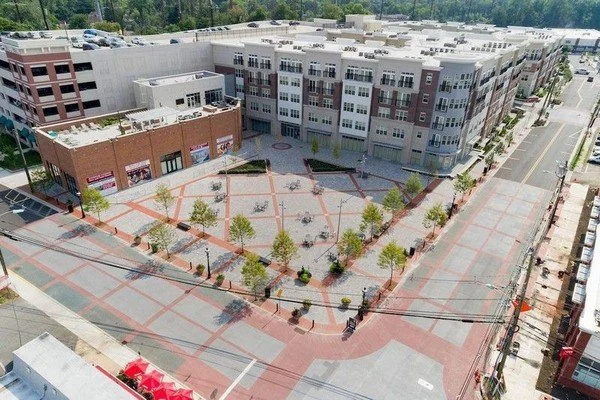
What was once a surface parking lot serving primarily commuters has become a destination within downtown Metuchen. The public plaza has become a focal point for community events and gatherings, while the new residential units and commercial spaces have brought additional activity to the downtown. Equally important, the development continues to accommodate parking for residents, commuters, and visitors through a structured parking facility.
Woodmont Metro demonstrates how a municipality can take advantage of an underutilized surface parking lot and transform it into a mixed-use development that supports the surrounding downtown while continuing to address its parking needs.
The Highlands at Morristown Station
Our next stop takes us to downtown Morristown, where a former NJ Transit surface commuter parking lot was located adjacent to the Morristown train station. The parking lot provided approximately 299 parking spaces for commuters utilizing the station.
Recognizing the opportunity to redevelop this property, NJ Transit and the Town of Morristown worked together to create a mixed-use, transit-oriented development. The property was rezoned to accommodate higher-density development, and a Request for Proposals (RFP) was issued to attract private developers interested in redeveloping the site.
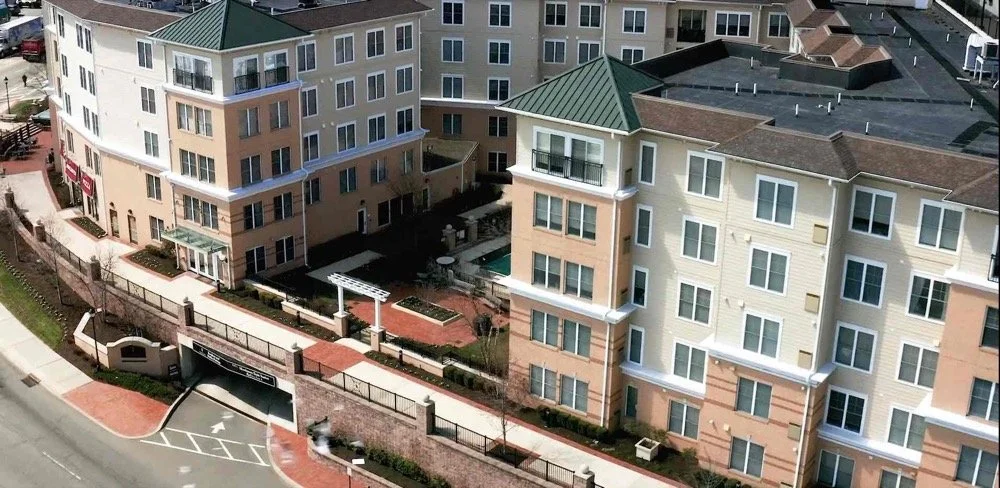
The result was The Highlands at Morristown Station, completed in 2009, consisting of approximately 217 residential apartments, 8,000 square feet of ground-floor retail space, and a structured parking garage providing approximately 722 parking spaces, including 415 spaces dedicated to commuters.
Our next stop takes us to downtown Morristown, where a former NJ Transit surface commuter parking lot was located adjacent to the Morristown train station. The parking lot provided approximately 299 parking spaces for commuters utilizing the station.
Recognizing the opportunity to redevelop this property, NJ Transit and the Town of Morristown worked together to create a mixed-use, transit-oriented development. The property was rezoned to accommodate higher-density development, and a Request for Proposals (RFP) was issued to attract private developers interested in redeveloping the site.
The result was The Highlands at Morristown Station, completed in 2009, consisting of approximately 217 residential apartments, 8,000 square feet of ground-floor retail space, and a structured parking garage providing approximately 722 parking spaces, including 415 spaces dedicated to commuters.
Linc at Orange Station
Our final stop takes us to the City of Orange. Located just steps from the Orange train station, a former surface commuter parking lot was transformed into a mixed-use development known as Linc at Orange Station.
Completed in 2016, the redevelopment introduced approximately 137 residential units, including rental apartments and for-sale condominiums, approximately 6,000 square feet of commercial space, and a new pedestrian plaza connecting Main Street to the train station. The development also incorporated structured parking to accommodate residents and commuters.
What was previously a surface parking lot has become a mixed-use development that brings new residents and commercial activity to the area while improving pedestrian connections between Main Street and the train station.
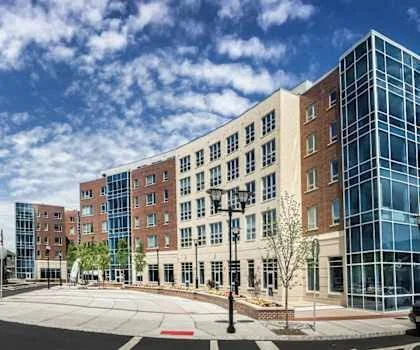
The addition of a pedestrian plaza is particularly important, providing a public space that connects the development to the surrounding neighborhood and encourages pedestrian activity. Rather than functioning solely as a place to park, the property now accommodates a combination of residential, commercial, public space, and parking uses.
Linc at Orange Station is another example of how a municipality can recognize the redevelopment potential of a surface parking lot and create a development that better connects the downtown with its public transportation infrastructure.
The transformation of surface parking lots into mixed-use redevelopment projects has become an increasingly common trend throughout New Jersey. Municipalities are recognizing that these underutilized properties offer opportunities to introduce new residential density, commercial activity, public spaces, and structured parking facilities, all within the same development.
These three examples demonstrate that providing parking and encouraging downtown redevelopment do not have to be competing priorities. Through thoughtful planning and vertically integrated development, municipalities can continue to accommodate commuters, residents, and downtown visitors while making better use of valuable downtown properties.
Surface parking lots have served an important purpose for decades, and parking will continue to be necessary for successful downtowns. However, municipalities should recognize that these properties can serve a much greater purpose than simply providing a place to park.
As downtowns continue to grow and evolve, municipalities should take a closer look at their existing surface parking lots and consider the redevelopment opportunities they present. What may appear today as an underutilized parking lot could become a new mixed-use development, a public gathering space, or even a catalyst for additional redevelopment throughout the downtown.
The next great downtown destination may already exist. It may simply be covered in asphalt.